


This Women’s Day, I dedicate this reflection to my mother — my compass for living a meaningful life.
My earliest lessons about money came quietly.
They were not lessons about markets or returns or compounding. They came from watching my parents at home and their relationship to money. I grew up in a modest, yet modern outlook family, in Jamshedpur. In our home, money was never discussed in dramatic ways. There were no conversations about wealth or ambition.
Instead, the words that floated around the dining table were different. Provident fund. Fixed deposits. Insurance policies. Planning.
Even as children, we sensed what money meant in our home. It meant stability. It meant that tomorrow had been thought about. It meant that there was a structure holding things together.
But the real lesson came later.
When my father passed away, my mother was still in her mid-fifties. Until then she had been a homemaker. After he passed away, alongside grief came something else — the need to step into decisions that had once felt distant. My mother could easily have chosen the safest path. She could have relied entirely on fixed deposits and existing savings. No one would have questioned that decision.
Instead, she chose to learn. Slowly, patiently, she began to understand the world of finance. Over time she did something remarkable. She did not just learn finance — she began participating in it. She went on to become a stockbroker. One of the most insightful ones I have known. What started as 7 Lakhs grew to 50 lakhs in 20 years. Watching her transformation taught me something powerful:
Reinvention is always possible, even later in life. Understanding money can change how we see ourselves.
Money, for my mother, became more than something to preserve carefully. It became something she could interpret, question and engage with. I saw her sit across from people who initially underestimated her and slowly command the room through clarity and depth.
Her understanding of money strengthened her confidence.
That stayed with me.
Over the years, I began noticing how women think about money in different ways, often shaped by the lives they have lived. For many women, money represents security. Their goal is not to build wealth but to ensure that the family is protected. Saving carefully is seen as wisdom. Avoiding risk is seen as responsibility.
These women are, in many ways, the silent financial managers of their homes. Yet their financial intelligence is rarely recognised as such.
And then there is a second shift that is slowly emerging.
Among younger working women today, money increasingly represents something else — independence.
For many women in their twenties and thirties, earning money means having choices that earlier generations often did not. It means the ability to support parents, to invest, to build careers, to start companies, or sometimes simply to walk away from situations that are not right.
This shift is still incomplete. The number of women in the workforce in India is still lower than it should be. But the mindset is changing.
Younger women talk openly about investing. They follow markets, use financial apps, and discuss financial independence in ways that were rare even a decade ago.
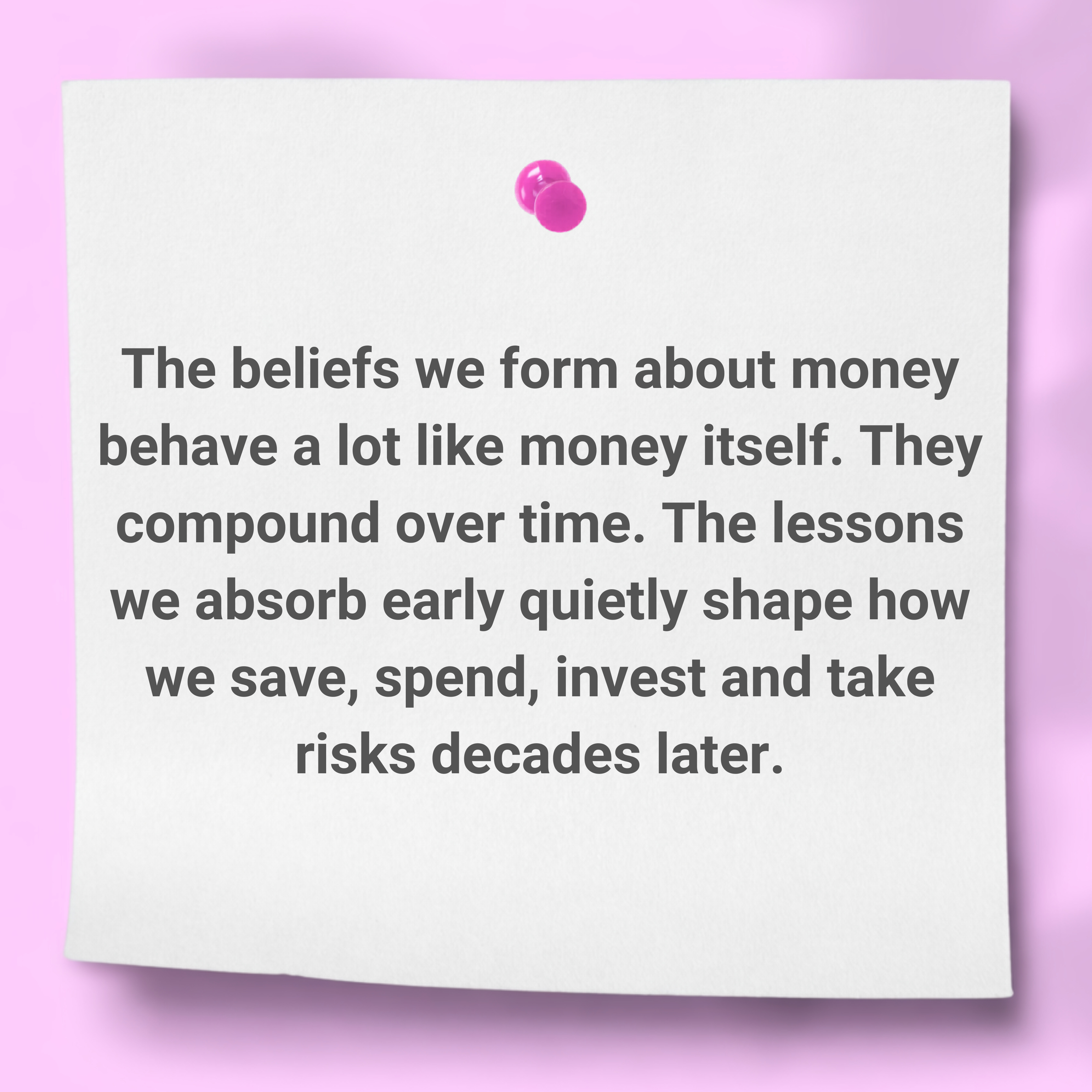
What fascinates me is how much of this relationship with money begins in childhood. Children absorb the emotional atmosphere around money long before they understand numbers. If money is associated with stability, they grow up feeling secure enough to take risks. If money is associated with anxiety or scarcity, caution often becomes deeply ingrained.
When I think about this, I return to my mother.
Her journey showed me that our relationship with money is not fixed. It can evolve. It can expand. For too long, many women have been taught to treat money with distance. To see it as complicated. Or worse, to see it as something slightly uncomfortable, even morally questionable.
But money itself is neither good nor bad. It is simply a tool. A powerful tool.
Perhaps that is one of the most important shifts ahead for women. Not just earning money, but understanding it. Engaging with it. Allocating it. Because when women understand money, they do not just change their own lives. They change the possibilities for the generations that follow.
This day, maybe the real message of Women’s Day is not just about celebration. It is about resolution.
A quiet commitment that we, as women, will begin to see money differently. That we will treat it with respect. That we will learn about it, talk about it openly, and feel comfortable engaging with it.
Because when women understand money, they do not just change their own lives. They change the possibilities for the generations that follow.
Happy Women’s Day. 🌸

