
Hey there! 🎉
As we brainstormed the concept of LetsUnBox, we wanted to demystify business basics, hence our tagline:
"Keep it simple. Talk to a friend, not a boardroom!"
The goal? To make business concepts and jargon easy (and fun!) to understand. We’re here to unbox those insights, layer by layer, and keep things interesting.
Lately, I’ve been diving deep into the world of Direct-to-Consumer (D2C) brands, and I’ve been fascinated by how small ideas turn into big movements. Founders are taking bold risks to connect directly with consumers, but trust me—it’s a learning curve, even for those of us who’ve been around the startup scene for a while.
LetsLearn: Why D2C, Why Now?
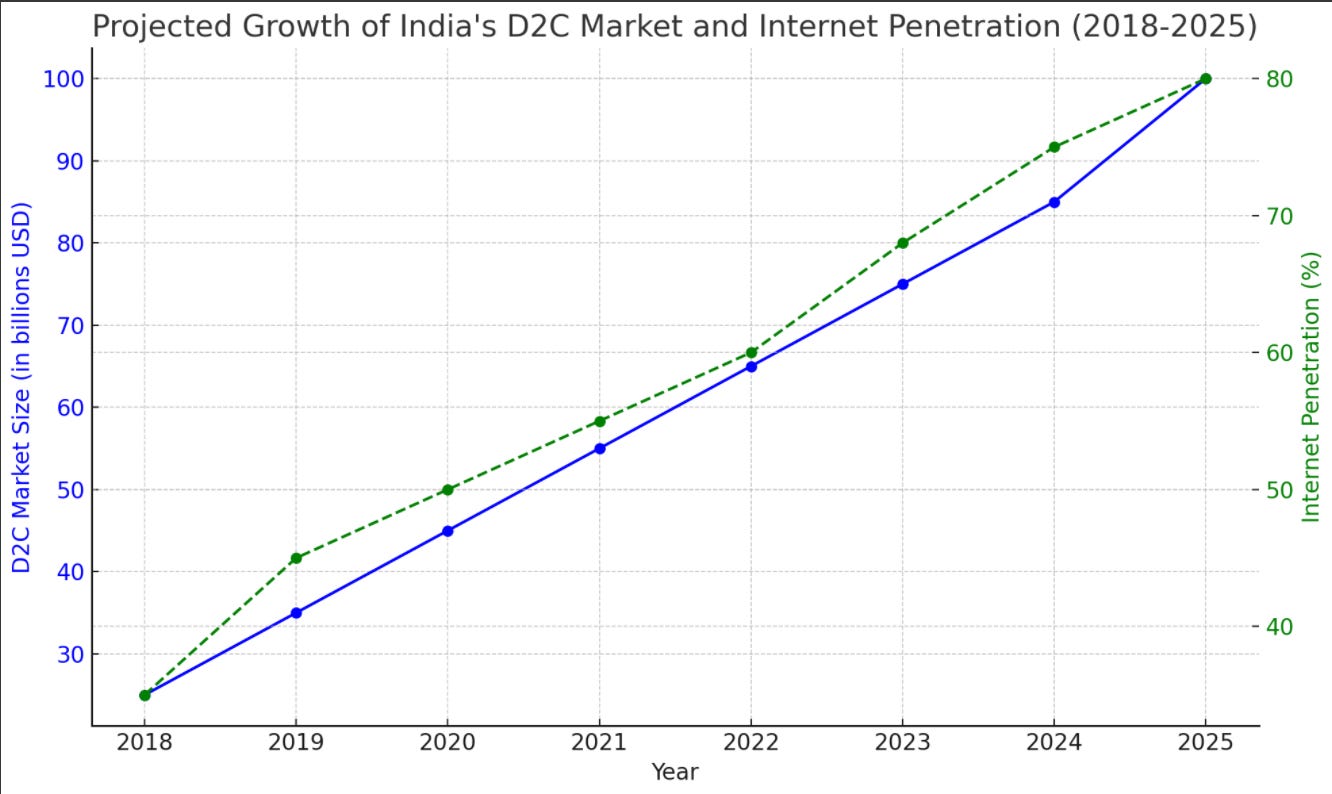
At LetsVenture, we’ve been watching the growing excitement around the India story unfolding. Investors are buzzing, and for good reason. The Indian D2C market is on a rocket-fuelled growth trajectory—projected to hit $100 billion by 2025. (Yeah, you read that right!)
This boom is driven by increasing internet penetration, higher disposable incomes, and, of course, the sheer convenience of shopping online. Look around next time you’re out shopping—you’ll notice the aspirations of young Indians are evolving.
A BCG report along with Snapchat estimates India’s total consumption spend at $860 billion, set to reach $2 trillion, driven by Gen Z (India’s largest segment, with 377 million people).
India’s consumption story is just beginning to unfold, and it's quite the page-turner.
LetsBreakItDown: What is D2C?
Let’s break it down before we dive deeper:
D2C is more than a trend
D2C isn’t just about cutting out the middleman—it’s about building connections. Founders create products that resonate with customers on a personal level, products that people genuinely care about. This isn’t just a sales model; it’s a relationship, and that’s what makes D2C so powerful.
Here’s a quick explainer for anyone new to the term:
D2C (Direct-to-Consumer): A business model where brands sell directly to customers, bypassing traditional retail. This could be anything from organic snacks sold via a website to digital services like online yoga classes.
Example: A beauty brand that sells eco-friendly skincare directly through its own site—100% D2C.
Consumer Products: The stuff we use daily, from food and clothes to electronics. They can be sold online or in stores.
Example: Your favorite shampoo that you grab at the supermarket.
Consumer Internet: Services we access via the internet—think e-commerce, food delivery, or digital services like fintech.
Example: Ordering food through a delivery app—hello, Consumer Internet!
Case Study: Amul’s Evolution—From Milk to Ice Cream Lounges
To see how powerful this transformation can be, let’s look at one of India's most iconic brands, Amul, and how it’s reinvented itself for today’s consumer.
Did you know? Amul is the world’s strongest food brand, according to Brand Finance’s Global Food & Drinks Report 2024, with revenues of $3.3 billion.
India’s Changing Consumer Behaviour: A Journey Through Ice Cream and Time


A Look Back in Time : Simplicity and Accessibility
The first image I’m sharing is from the early 1970s, showing Rajiv and Sonia Gandhi enjoying ice cream from a street vendor. The photo credit goes to Baldev Kapoor, who has chronicled India’s history for more than five decades. It’s a nostalgic snapshot from an era when choices were simple, and consumption was driven by availability. Ice cream wasn’t a status symbol; it was an affordable treat tied to local tastes and traditions.
Back then, the heart of consumption was local—street carts and kirana shops.
Fast Forward to Today: A Premium, Curated Experience
Fast forward to today, and we see how Amul, one of India’s most iconic brands, has reinvented itself to cater to a new generation of consumers. The latest Amul ad showcases the Amul Ice Lounge, a luxurious concept designed for the GenZ consumer. Today’s consumer wants more than just ice cream; they want a curated experience. They crave global flavors and an aesthetic that speaks to their aspirations. Amul has adapted brilliantly, introducing premium products like Jamaican Toto and Persian Peach ice cream, appealing to consumers’ desire for uniqueness and quality.
Today choices are abundant, and consumers are driven by uniqueness, quality, and brand association.
The Shift
What was once a practical, functional purchase has now evolved into a lifestyle choice. Consumers are no longer just buying ice cream; they are buying into a brand’s story, its values, and the experience it promises. The Amul Ice Lounge reflects this shift perfectly—it’s designed to attract a consumer who is well-informed, well-traveled, and willing to pay for experiences that align with their identity.
This shift in consumer behavior—from practicality to premiumization —reflects a larger transformation in India’s consumption patterns. Fifty years ago, convenience ruled; today, it’s all about personalization and experience. Added by increased spending power and a growing economy. This is what encapsulates the $100B market size.This evolution helps explain why D2C is such a compelling space in India today, with consumers ready to embrace brands that offer something deeper than just a product. This makes one understand what we mean when we say a $100B market size on consumer spending on D2C.

LetsTalk: Your Turn
What’s one D2C brand that has impressed you recently, and why? Drop me a line—I’d love to feature your responses in our next newsletter! Let’s unwrap these insights together.
Final Thought
"The brands that succeed aren’t the ones who shout the loudest, but the ones who listen the closest." — Anonymous
Stay curious, keep exploring, and let’s continue unboxing these insights together!
Team LetsUNBOX