

Investing in women founders in India is still underrepresented — but some of the strongest businesses I have seen come from here.
This is a short case study on why I invested in Zwende. Very relevant to The PitchRoom series.
Early-stage investing is often described as pattern recognition. But in reality, it is closer to pattern imagination. Investors do not see what exists today. They try to imagine what the world might look like if a particular founder is right. What Steve Jobs said about being able to connect the dots looking back hold true in angel investing
Zwende was one such bet for me.
I first invested in the company around 2020, when the thesis was still forming and the category itself was not clearly defined. At that time, the idea sounded almost simple: help independent creators and artisans sell personalized products online. But beneath that simplicity was a deeper question about the future of commerce itself.
Would consumers continue buying standardized, mass-produced goods? Or would they increasingly seek products that reflected identity, individuality, and personal stories?
Zwende was built around the belief that the second future was already emerging.
Five years later, the company offers an interesting lens into how that thesis has evolved.
The Insight Behind Zwende
2020. This was about 2 years after the biggest acquisition in e-commerce globally by Walmart of Flipkart. Meesho had started to establish the social commerce narrative. When we think about commerce in India (e-commerce or social commerce), we often focus on scale — large marketplaces, logistics networks, standardized supply chains. Yet parallel to that system, there has always existed another economy, far more fragmented but equally powerful: the maker economy.
Across India, millions of artists, artisans, hobbyists and independent creators produce objects that are deeply personal — handcrafted lamps, embroidered textiles, painted home décor, personalized gifts, and dozens of other forms of creative expression.
The problem has never been creativity. The problem has been distribution.
Very similar to what we saw in FarmDidi.
Most creators sell through informal channels: Instagram pages, weekend flea markets, WhatsApp groups, or word-of-mouth communities. These channels work, but they do not scale easily. Discovery remains difficult, trust is fragmented, and creators spend a surprising amount of time managing tasks that have little to do with their craft — photography, marketing, logistics, payments, and customer support.
Zwende began with a simple premise:
What if technology could unlock the creative economy in the same way that Shopify unlocked independent brands or Etsy unlocked global craft sellers?
From Marketplace to “Makerplace”
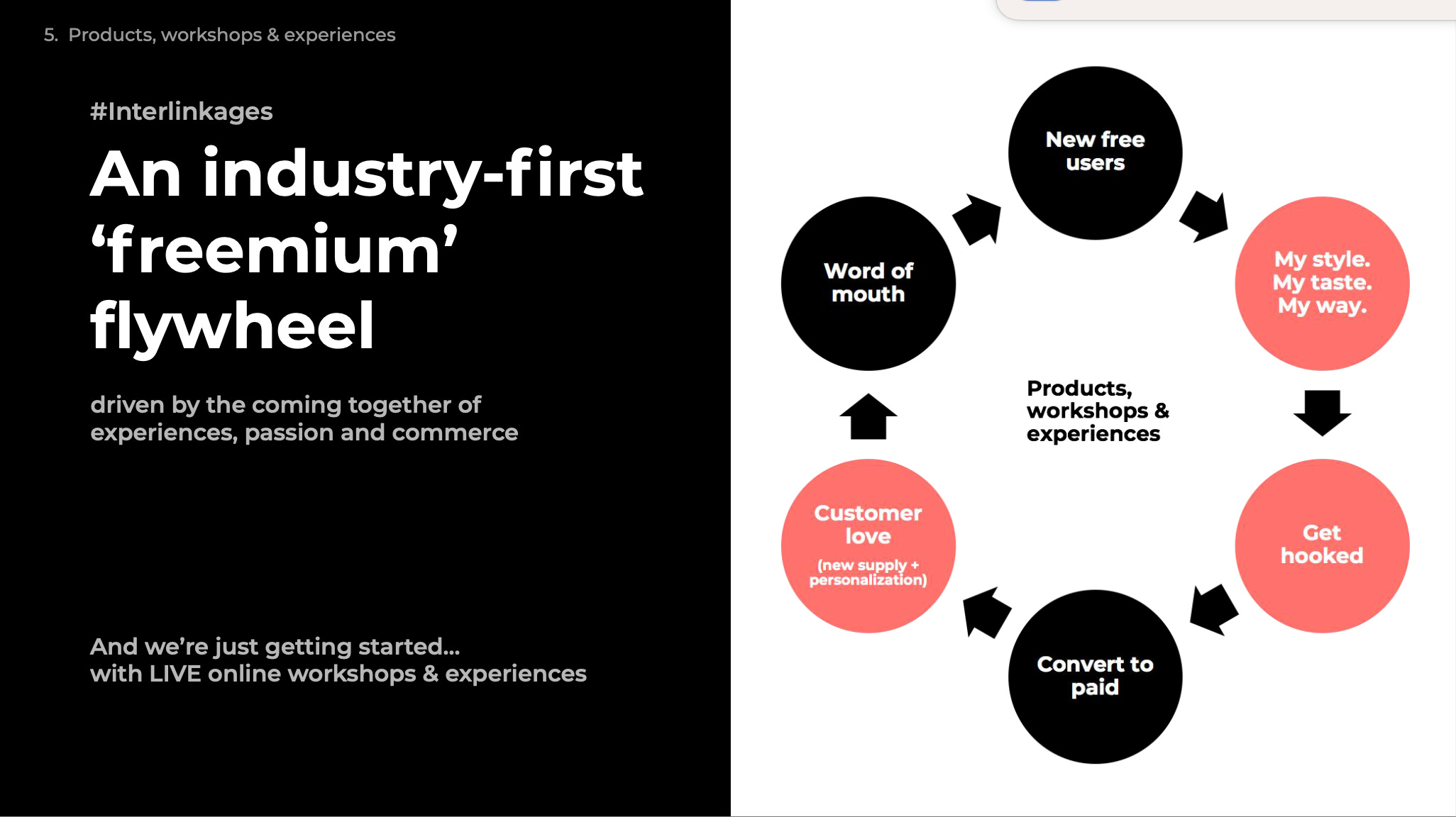
In its early days, Zwende looked like a specialized marketplace for handcrafted and personalized products. But over time the founders realised that the opportunity was larger than simply listing products online.
The company began evolving toward what it now describes as a “makerplace.”
Instead of a traditional marketplace where sellers merely upload catalogues, Zwende enables creators to:
• sell products
• teach workshops
• build communities
• showcase their craft
This combination of commerce, learning and storytelling changes the relationship between buyer and creator.
A customer purchasing a handcrafted lamp or nameplate is not simply buying a product. They are buying a story — about the maker, the craft, and the cultural tradition behind it.
That emotional layer is what the company refers to as “emotion-commerce.”
The Long Tail of Creative Demand
One of the insights that attracted me to the company early on was the long-tail nature of creative demand.
Mass retail works well when millions of customers want the same product. Creative commerce behaves differently. Each buyer may want something slightly unique — a customized nameplate, a personalized gift, a handmade decorative item that reflects their personality.
Platforms built for scale often struggle with this long tail.
But technology, particularly personalization engines and modular product design, can unlock it.
Zwende built systems that allow customers to customize products in real time while enabling creators to manufacture on demand. Instead of holding inventory, the platform operates largely through virtual SKUs, allowing an enormous catalog of possible designs without the burden of traditional stock.
Today, the platform supports:
• 20 billion+ possible SKUs
• 10,000 new SKUs created daily
• 800+ brands and creators
• 8000+ artisans on the platform
For many of these creators, Zwende represents their first meaningful online income stream.
Five Years of Progress
Looking back at the original investment thesis in 2020 and comparing it to the company’s trajectory today reveals something interesting: the core idea has remained remarkably consistent, even though the execution has evolved.
In 2020, the company was still experimenting with workshops, customization tools, and creator discovery models. Today, revenue has grown to 5x with strong improvements in unit economics.
The platform has also built a sizeable community that reduces dependence on paid acquisition. Zwende’s organic ecosystem now includes:
• 500,000 community members
• 353,000 Instagram followers
• 200,000 WhatsApp subscribers
• 275,000 email subscribers
Around 30% of revenue is driven organically through this community, which is a meaningful advantage in a world where customer acquisition costs continue to rise.
My 5Cs Framework
When I look back at the original decision to invest, it is helpful to revisit it through the framework I often use when evaluating early-stage startups.
C1: Clarity — Founder and Problem
I met the founders, Sujay and Innu, via a referral from a friend. As investors referrals are the strongest endorsement for founders. If you are a founder, there is a lesson to learn from the Zwende founders – they research, find the investors they think would be relevant and then relentlessly chase for a warm introduction. If you want to get your early investors. referrals work like magic.
On the business side, the team demonstrated early clarity about the structural problem they wanted to solve. They recognised that the challenge for creators was not lack of talent or even lack of demand. The real constraint was infrastructure — the systems required to turn creative output into scalable businesses. This infrastructure would be the key to build distribution.
That clarity shaped the platform’s model: creators focus on making, while Zwende provides the surrounding services that enable commerce.
C2: Category — Market and Timing
Creative commerce has quietly become one of the most interesting segments of the global internet economy. Platforms like Etsy, Shopify and Patreon have demonstrated that independent creators can build meaningful businesses when the right infrastructure exists.
Estimates today suggest that the global creative commerce market exceeds $110 billion, while the Indian opportunity alone could reach $30 billion as personalization and premium gifting become mainstream.
Zwende sits at the intersection of these trends.
C3: Capability — Technology and Operations
What differentiates the company from a simple marketplace is the technology layer behind supply creation.
The platform uses data and AI to identify emerging consumer demand, curate creator supply, and expand product categories. This allows the catalog to evolve continuously while remaining differentiated.
Equally important is the operational infrastructure that supports creators — enabling them to handle logistics, pricing, customization and customer experience without needing enterprise-level capabilities themselves.
Watching the founders build Zwende over the last 5 years has been a huge learning for me too. Innu as a founder is hands-on, operationally focused and ensures every data point is monitored and managed. For any business to build a predictable outcome, data in today’s world lies at the core. As a founder, if you have blind spots to the levers that can impact your business, the business is bound to surprise you when external factors change.
C4: Cost to Build — Moat
In creative marketplaces, the moat is rarely technology alone. It is built through community, supply relationships and brand trust.
Zwende’s defensibility emerges from several reinforcing layers:
• a growing community of creators and buyers
• a vast catalog of unique designs
• strong storytelling around creators and crafts
• customer feedback loops that refine supply
Together these elements create network effects that are difficult for competitors to replicate quickly.
I understand this deeply as I have designed and built LetsVenture as a marketplace. The moat is most often time, and capital cannot fast track the path.
C5: Conviction — My Personal Thesis
For me, the appeal of Zwende lies in the convergence of several long-term shifts.
Consumers increasingly want products that feel personal rather than generic.
Creators increasingly want independence rather than employment.
And technology increasingly allows small producers to operate at a scale that was once available only to large companies.
Platforms that connect these forces have the potential to reshape how entire categories of commerce operate.
Zwende is still early in that journey, but the direction is promising. Time and trust will become the moat that cannot be replicated.
Going forward
As the company continues to grow, several factors will determine its long-term trajectory. The first is category expansion. Creative commerce is inherently fragmented, and new product segments can unlock significant growth.
The second is creator success. Platforms become durable when the creators on them build meaningful livelihoods.
And the third is community-driven discovery. If Zwende continues strengthening its organic ecosystem, it can maintain efficient customer acquisition even as the market becomes more competitive.
Taking a page from Quick commerce models, the monetisation to allow creators to get discovered has not yet seen relevance in creator platforms. Almost think of this like a personalised Amazon where you can discover, engage, learn and transact with creators.
A Closing Thought
Startups are often described as technology companies, but sometimes the most interesting innovations are social rather than technical.
Zwende is not simply building a marketplace. It is experimenting with a new way of organising creative labour — where thousands of independent makers can collectively serve a national market while retaining their individuality. The impact that has been created is mind boggling in terms of numbers. Revenues for individual creators have gone up from 10-15x. Imagine – in a country like India that thrives on creativity, personalisation and the absolute depth of history and culture.
If that system continues to evolve successfully, it could quietly redefine how creative businesses scale in India. And that was the possibility we believed in when we first invested.

PS: This article reflects my personal perspective as an investor and is not investment advice. Every investment decision should be made independently based on one’s own analysis and risk appetite.
Hello Shanti Ma’am, I have sent you a message earlier. Kindly request you to please check it when you have a moment. Thank you 😊