

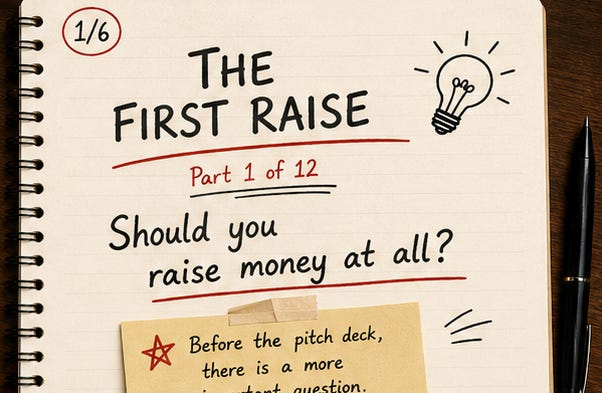
Should you raise money at all?
I spend much of my professional life around fundraising, so perhaps the most useful place for me to start this series is by saying something that sounds counterintuitive: you do not “have to” raise venture capital.
I have spent a decade sitting across the table from founders raising their first round. Most arrive with a pitch deck, a financial model and a number they want to raise. There is no shortage of information online to help them prepare. In fact, with AI, increasingly every founder can arrive with a polished model, an exit scenario and a deck that looks investor-ready.
But fundraising is rarely about the deck and the numbers.
This is the first post in a 12-part series for first-time founders on fundraising. Over the next 12 posts, I want to take one part of the journey at a time and make it simple — how much to raise, how investors think about your business, valuation, knowing your pitch deck, finding investors, running the process, term sheets and, finally, choosing the right capital.
No jargon. No complicated fundraising playbook. Just the things I think a first-time founder should understand before taking someone else’s money. I’ve made this a series of images - easier to remember for sure.
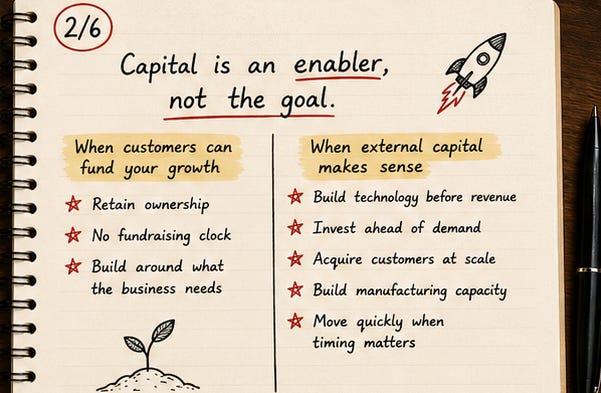

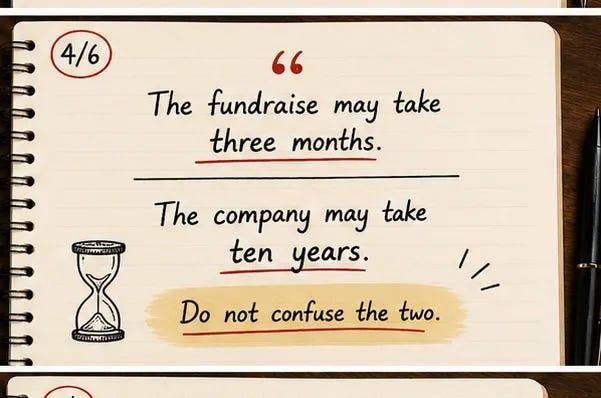
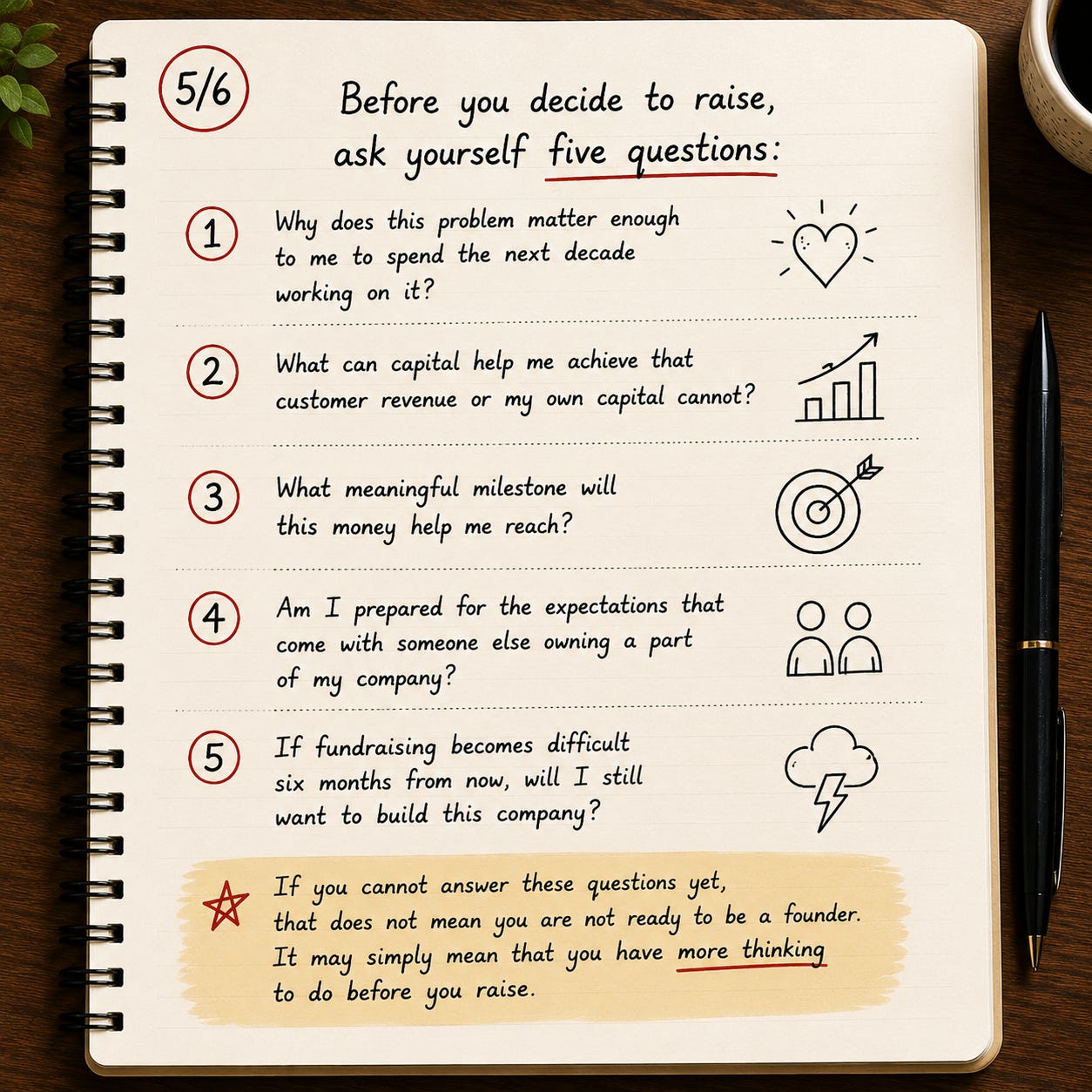
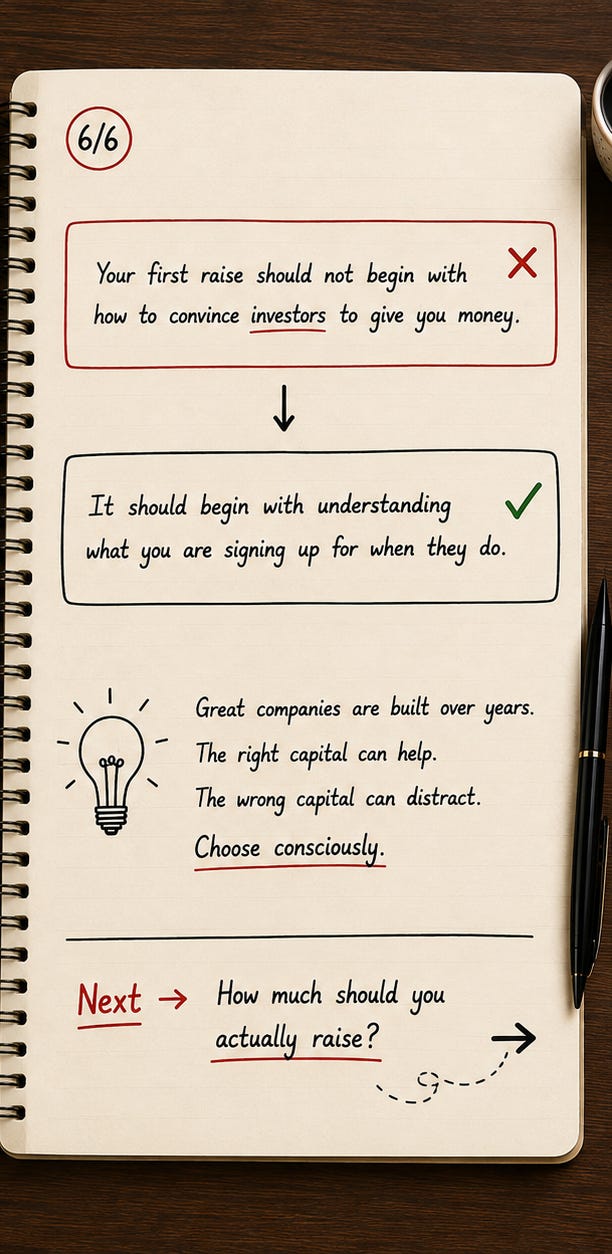
Spend time thinking about these questions. I would love to hear feedback from founders who have bootstrapped and enjoyed the journey, and founders who have raised and regretted the decision.
Have a good weekend.
Shanti
#TheFirstRaise #Fundraising #Startups #Founders #VentureCapital #AngelInvesting #ElvixForFounders
1 question please
When a founder can't quite answer, "what capital unlocks that revenue can't" is that a dealbreaker for you, or just something you probe deeper on the call?