

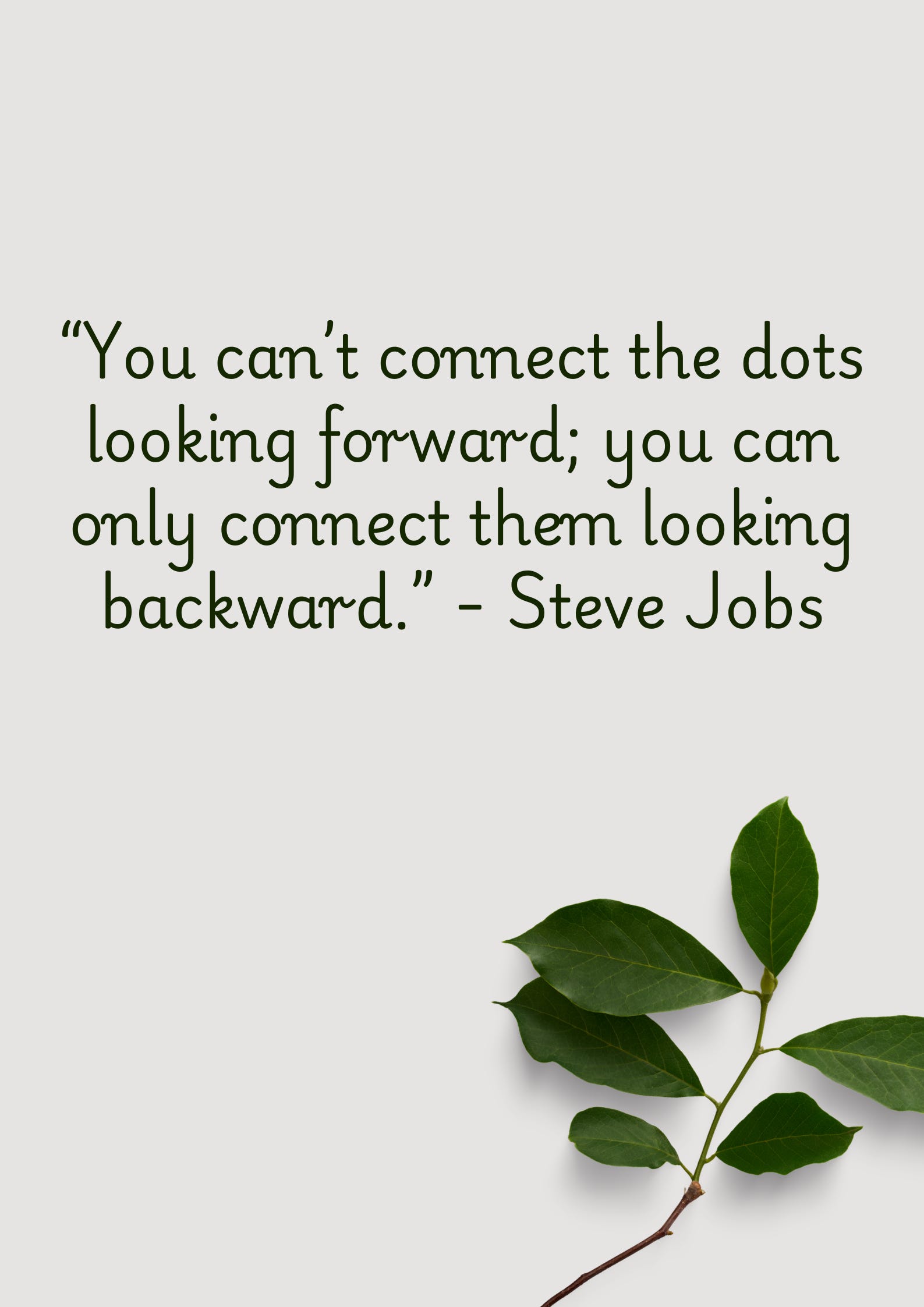
Steve Jobs once said, “You can’t connect the dots looking forward; you can only connect them looking backward.”
It is a line that feels increasingly true the longer you build. I have lived this in my startup journey. Hindsight has a way of creating coherence. It smooths uncertainty and makes decisions appear more linear than they ever felt at the time.
But when you are actually in the middle of building—or investing—you do not have joined dots. You have a choice. Often, an uncomfortable one.
As investors, decisions are made with incomplete information, limited time, and personal context that rarely makes it into headlines or pitch decks. There is pressure. There is responsibility. There is also fear—of missing out, of getting it wrong, of disappointing people who are counting on you.
This is why I have become cautious about judging decisions purely by outcomes.
An unpopular point of view is this:
a good outcome does not automatically mean a good decision.
And a difficult outcome does not automatically mean the decision was wrong.
Over time, I have found it helpful to separate three things that often get collapsed into one: decision, process, and outcome.
A decision is the choice made at a specific moment.
A process is how that choice was arrived at.
An outcome is how the world responded to that choice.
Only one of these is fully within our control.
A good decision, at the moment it is made, usually has a few things in common. It:
uses the best information reasonably available at that time
considers real alternatives, not just the most attractive one
acknowledges constraints—market conditions, capital, energy
aligns with where the decision-maker actually is, not where they wish they were
None of this guarantees success.
Outcomes are shaped by many forces that sit outside the decision itself. Markets shift. Timing changes. Execution is uneven. External events intervene. Sometimes, randomness plays a bigger role than we like to admit.
This distinction matters because when things do not work out, the instinct is to ask a single, blunt question: Was the decision wrong?
Often, that is the wrong question.
A more useful one is: What changed after the decision was made?
What did we not anticipate? Which assumptions no longer held?
There is an important difference between a bad outcome caused by a poor process and a bad outcome that followed a thoughtful one.
A bad outcome after a bad process is a signal to improve how decisions are made.
A bad outcome after a good process is an invitation to expand how we understand the world.
One of the more dangerous situations, in my experience, is a good outcome after a weak process. That creates false confidence. It teaches the wrong lessons and makes future decisions more fragile.
Watching founders and investors navigate high-stakes choices has reinforced something for me: good judgment does not eliminate uncertainty. It only helps us live with it more honestly.
Looking back allows us to connect the dots.
In my spiritual practice, I learnt something that has stayed with me: choice creates awareness, not the other way around. That is exactly how life plays out in business as well.
We often assume business and life are two separate threads. They are not. They are deeply intertwined states of our being.
Learning from the notes in the margins of one’s life notebook, in my view, requires slowing down enough to see the trade-offs. Naming what we know and what we do not.
Choosing in a way we can stand by, even if the dots connect differently later.
That, to me, is where real decision-making lives.
More notes in the margin will follow.
Have a thoughtful start to 2026.
So true about the harsh yet beautiful reality of decision-making and outcomes.
Yes, context is often the underdog in our race towards success. Thanks for the valuable insights.
It is true that a good outcome after a weak outcome is dangerous as it is the exception and not the norm.