

Picture of the week

What does it take to be a Founder? We talked about skill in Week 1. I labelled as the Founder Quotient - Analytical and measurable. A combination of IQ and PQ. (PQ being Persistence Quotient)
This week let’s talk about the Psychology of Founders. We can also label this as the EQ of Founders. This one is hard to predict as well as measure. It is purely driven by past context and life experiences.
A large listed company founder told me once on the secret to leadership hires. “Vyawahar pehele, vyapar badmein.” (Attitude First, Business Next).It pretty much summarises how the business world measures founders, and how people choose to work for founders. Business skills can be learnt and taught. However it is very hard to change people and their basic DNA. This has been one of my biggest learning of 2022.
What makes for a founder who people want to work for? We hear this over and over again that who you work with matters the most. Sounds clichéd again?
Understanding the Why
Before we breakdown on attitude, we need to look at the current context of people wanting to become founders. I believe this will drive subconsciously a lot of the attitude you bring to work, a bias towards how you respond at times of crisis, and how the top deal breaker impacts other parts of your life.
This is just about you:
I am in a fulltime job. I am open to exploring new opportunities. I want to learn new things. Money continues to be an important factor.
I hate my job. I am inspired by the stories I read about my startup friends. I want to be part of the excitement.
I don’t have a job. I think starting up will give me learning and help me find a great opportunity if my startup fails.
I am college graduate. I want to build a startup as it will help my resume for MBA some time later.
I think startups are the fast path to making money, by raising capital quickly.
I want to own my time. I don’t want a job. I think time is money.
I want to take a break. I will use the break to understand myself, and work on ideas I have been thinking about.
I love what I do today. However, I know there is a real problem to be solved, and I think there is more I can do and create value. Money is second priority.
If you were to take a soft poll on this list, who do you think would be the closest to being ready to be a founder?
For me it is #8. I think 6 and 7 might eventually become founders, but from a readiness perspective they may need more time.
Understanding the Who
Now lets talk of EQ. I would summarise EQ in one word : “Self Awareness”. I believe as a founder, that is the single quality you need to focus on. Just being aware of your own bias, your own context as well as your own blind spots goes a long way in understanding your response to situations, conversations, and decisions. Knowing that there are diverse approaches, and the ability to respect and accept the diversity, is what leads to empathy at the workplace.
Personally, as a founder, I find that expectations from founders is almost unreal. Almost like we are not humans, but robots running an organisation. As founders, we know there is NO playbook to follow. You might have templates and frameworks around business building, but how you manage an organisation with consistency on emotion, with no drama is hard. And that is the reason founders often are lonely, because being self aware could also leave you less vulnerable in the face of crisis.
Having the ability to own up to all decisions - good, bad, and ugly with “Intellectual Honesty” is a journey, and a path of learning. There is never a moment when you think you know it all, and being aware of this is the most important trait you will develop as a founder.
I have seen a lot of people label “being nice, listening well” as having a high EQ. That is just being comfortable, and avoiding conflict. That is not having empathy or having high EQ.
Heard from Founders
I did a poll with few founders on what they thought was the definition of EQ at work. Some interesting responses emerged.
“It is never as good as it seems. It is never as bad as it seems.”
As a woman founder said: “Men compete on aggression, compassion is something that can make us distinguished leaders. I have been taught by my grandmother to lead like a woman (my grandmother was India’s first woman gynaecologist and hospital entrepreneur) ie lead with compassion. That’s what sets me apart from everyone else from my team, my other colleagues etc. This compassion has a strong way of attracting people to believe in you and your vision. And it’s permeating, makes people reciprocate, and work harder with full devotion and loyalty.”
Another said: “Resilience is the one word that comes to my mind as a female founder…I see myself constantly building on my resilience.”
And another founder said: “The outcome of good EQ would be being able to alter one's own behaviour according to different personality that one interacts with.”
Interestingly women founders still see EQ as a disadvantage when demonstrated openly, where it is celebrated for men, and seen as a sign of weakness for women. Quoted: “In my industry (blue collar hiring and management), compassionate and caring leadership gets treated as a weakness if introduced by a women founder and instead manly sort of aggressive brutal leadership is counted on as strength”.
I would like to close with my favourite definition of leadership (choose what works for you and how you would like to define yourself):
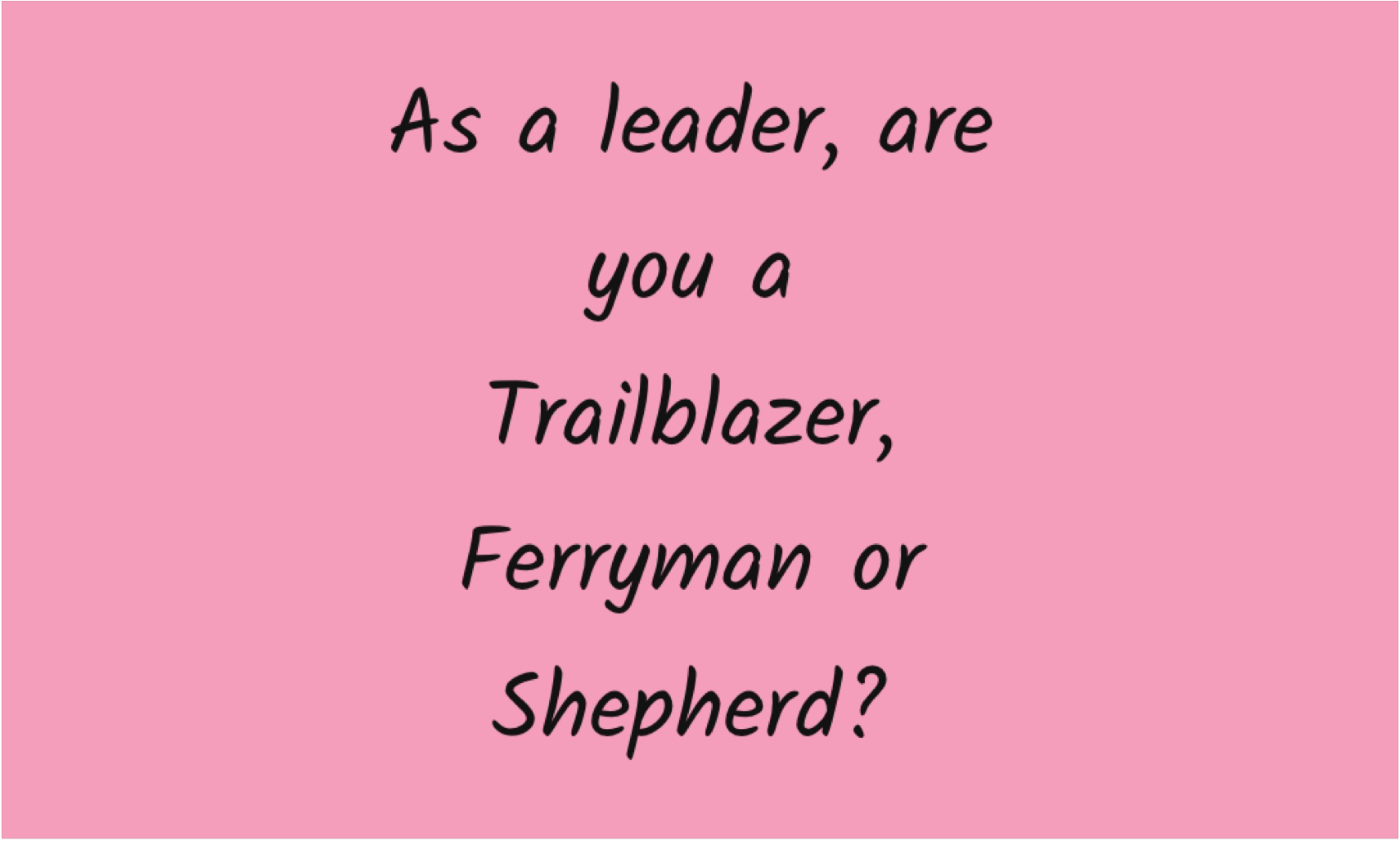
Dalai Lama on leadership: Buddhist tradition describes three styles of compassionate leadership: the trailblazer, who leads from the front, takes risks, and sets an example; the ferryman, who accompanies those in his care, sharing the ups and downs of the crossing; and the shepherd, who sees each one of his flock into safety before himself. What these approaches have in common is an all-encompassing concern for the welfare of those they lead.
For Week 3, I will talk about Founder Conflicts. Stay tuned.
Very nicely put. There is the prisoners dilemma and there is the founder's dilemma. In the second case though, there is only one person but the conflict remains the same