


Last week I wrote about conflict. Interestingly in the same week I saw two posts on conflict resolution. One from Sahil Bloom, who I follow on Twitter. I have linked the article here (the 5-5-5 model for conflict management)

The other one actually got me thinking deeper. I follow the Buddhist monk Yongey Mingyur Rinpoche. There was a YouTube video he posted this week on how to manage conflict!
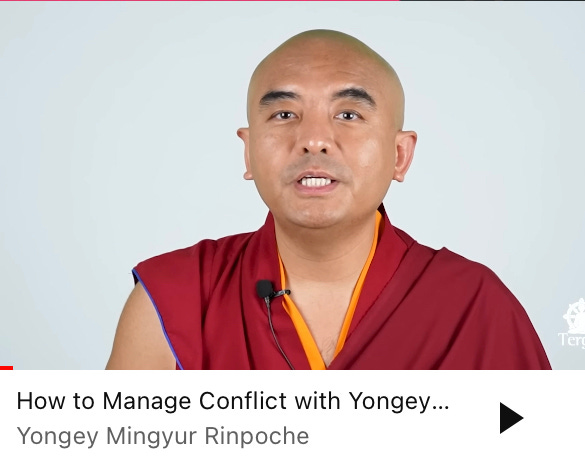
The link is here on YouTube.
Key takeaways from the two posts is :
Here the assumption is that the two people involved in the conflict have the maturity to acknowledge and listen to the other person, and be willing to accept a different viewpoint to have a resolution.
I want to admit I am not a fan of offering solutions to people. Prescriptive solutions doesn’t work as everyone likes to think they arrived at the solution on their own. (especially people who are in our inner circle) However, having seen two posts the same week, compelled me to write another follow up article on conflict. Either the world is seeing more conflict or I am over simplifying this.. I write my own approach to conflict resolution. As a disclaimer, it has not worked every time.
This is where we need to dive deeper.
My 10-10-10 rule
Many of us would know of the 10/10/10 rule for decision making, defined by Suze Welch where she prescribes taking a decision knowing how this would impact us in 10 mins, 10 months and 10 years. I find this a bit too narrow and far too stretched. I have personally applied my own 10-10-10 framework for decision making during conflicts (it could be conflict with a person or a conflicting situation)
The framework is looking at the conflict and how resolving it would impact me in 10 days, 10 weeks and 10 months. It has worked well as I do believe giving away short term gain in resolving a conflict could go a long way in helping us be more grounded and flexible.
Conflict resolution when both win
Conflict typically arises when there is a difference of opinion around the expectation of how something should be implemented or outcomes expected. These are easier to resolve if both sides are keen to resolve it. Listen deeply (this is my learning of 2022 too) and know that you may not have all the answers. These are typically transactional differences and there is long term alignment. When you sense a conflict brewing , use the “I will listen with the intent of changing my point of view if needed “. This typically happens when there is mutual respect, and flexibility to changing viewpoints. Post the resolution, viewpoints are not revised.
Take away: There is long term alignment, ability to listen deeply, with mutual respect, and the flexibility to change viewpoint.
Conflict resolution when there is no resolution
Some conflicts come to us for the lesson we need to learn in our life. It might sound spiritual but I firmly believe every one who we meet is here to teach us a lesson. Don’t misread “teach” as something that is negative. It is just a way to say that there are lessons to learn for all of us in our lifetime around many areas of our life. If we are not willing to accept this, the same situations will manifest in different ways.
My experience is that difference in core values typically can’t be resolved as this comes from a deeper need or context. How we view the world, how we set priorities and the areas we are willing to negotiate dictate how we address conflict. Here we should we willing to lose or end the relationship, if we cannot agree on the way forward. I’ll share some simple examples :
while hiring for a startup, there might be employees who are very clear on their deal breakers at work. There could be in conflict to the core values of the company and the employee to be hired. This cannot be resolved.
Among two founders, there could be a conflict in how they want to define the long term outcomes, exit principles and the path forward. This could result in one founder exiting the company.
Among people in relationships, there could be a conflict in the approach to life. One might want wealth creation, and another might want living a life that does not demand high focus on wealth. I don’t know how this conflict resolution will play out, as it takes one person out of the flow.
These are just instances but it drives home the point that the resolution will result in a change in the core values for one.
Realigning with a core value for one person might also result in regret in the long term, if it does not give back much higher returns for changing course.
What does conflict resolution tell us?
Conflict resolution typically also reflects a subtle power equation and our context to the solution. The power could be the relationship need, knowledge gap, maturity of the two people and our own attachment to the solution.
Wayne Dyer wrote a book “Every problem has a spiritual problem”. This is conflict resolution told in a different way.
As we face and address conflicts, know well that the conflict resolution reflects more about our own self, our own belief, our own context, what we stand to win or lose, and our own triggers than the other person.
And not every story needs to have a happy ending, as long as the story does not repeat itself.
Key Framework for Conflict resolutionApply the 10-10-10 rule. How resolving the conflict would impact me in 10 days, 10 weeks and 10 months
Conflict resolution can happen if there is ability to listen deeply, with mutual respect, and the flexibility to change viewpoint. There has to be long term alignment.
Conflict resolution that requires realigning with a core value for one person might also result in regret in the long term, if it does not give back much higher returns for changing course.
Conflict resolution always reflects more about our own self, our own belief, our own context, what we stand to win or lose, and our own triggers than the other person.
I hope your first month of the year has had a great start. For me, I worked on empowering a community in a very “founder/ startup “ way, and the year has been a great start for me. I’ll share more on this in the next blog to follow.